Call about your floor: (352) 677-2664

Services

Ocala Garage Floor Coating Services

Garage floor coating services can sound similar until the floor condition is reviewed. Use this page to understand the main coating and preparation categories before choosing what to ask about.

Epoxy Garage Floors

Epoxy systems can make sense when the slab is properly profiled and the work window allows enough cure time. The key questions are whether existing paint or sealer must be removed, whether oil spots need treatment, how deep cracks are, and whether the garage can stay clear long enough for the coating schedule.

For epoxy, ask about the cure window, slab profile, garage downtime, and how old paint or sealer will be removed before the coating goes down.

Ask about epoxy garage floors

Polyaspartic Coatings

Polyaspartic coating systems are often discussed because they can cure faster than many traditional epoxies and can be paired with decorative flake. Faster cure does not remove the need for grinding, cleaning, moisture review, and careful edge work around stem walls, thresholds, drains, and cabinets.

For polyaspartic, ask about return-to-use timing, UV exposure near open doors, topcoat texture, and edge work around thresholds and stem walls.

Ask about polyaspartic coatings

Flake Floor Systems

Decorative flake systems hide small color variation and give the floor a textured finished look. The amount of flake, broadcast method, scraping, and topcoat choice can change the final feel underfoot, especially in garages where wet shoes, irrigation water, or rain blow-in are common.

For flake systems, ask about broadcast level, color blend, scraping, topcoat texture, and whether wet shoes or rain blow-in require more traction.

Ask about flake floor systems

Concrete Grinding and Prep

Grinding and surface preparation usually separate a short-lived coating from one that has a fair chance to perform. Prep can include removing loose paint, opening the concrete surface, chasing weak edges, cleaning out cracks, and checking whether a previous sealer is blocking bond.

For grinding and prep, ask how the crew identifies old sealers, oil contamination, weak concrete, pitting, and cracks before recommending a coating.

Ask about concrete grinding and prep

Patio and Shop Coatings

Patios, hobby shops, storage bays, and detached garages need a different prep plan than a clean two-car garage. Sun exposure, dust, vehicle weight, workbench traffic, mower storage, and water at the slab edge can all change what coating system and texture are worth discussing.

For patios and shops, ask about open-edge water, sun exposure, mower and tool traffic, dust, and whether a garage-style finish fits the space.

Ask about patio and shop coatings

Garage Floor Resurfacing

Resurfacing discussions are helpful when the concrete is worn, stained, pitted, or uneven enough that a simple cosmetic coat would not solve the problem. A contractor may need to look at spalling, hollow patches, previous repairs, expansion joints, and whether the slab should be repaired before coating.

For resurfacing, ask what is cosmetic, what needs repair first, and whether pitting or spalling makes coating alone the wrong first step.

Ask about garage floor resurfacing

Prep questions that belong in every service discussion

Whether the estimate is for epoxy, polyaspartic, flake, or resurfacing, the surface preparation plan should be specific. A contractor may need to grind old coatings, clean oil, repair cracks, fill control joints selectively, test for sealer, or explain why certain damage should not simply be coated over.

Ocala garages are often working spaces, not empty display rooms. Golf carts, mowers, tools, freezers, storage bins, and farm equipment can all affect staging and cure time. That is why the details you share before scheduling matter.

How service scope changes by floor condition

A bare slab with light dust may need a straightforward grind, cleaning, base coat, broadcast, and topcoat discussion. A painted slab is different because the old coating has to be tested for bond and often removed before the new system can be trusted. Oil-stained concrete needs a separate discussion about contamination, because a coating placed over trapped oil can release even when the surface looks clean. Pitted or soft concrete may need patching or resurfacing materials before a decorative flake finish makes sense. If the garage has cabinets, stairs, stem walls, drain edges, or a water heater platform, ask how those transitions will be handled so the finished floor does not look clean in the middle and unfinished at the edges.

For Marion County homes, the best service match usually comes from practical use. A retirement-home garage used for parking and storage may prioritize a clean color blend, easy sweeping, and predictable return-to-use timing. A detached shop near a rural drive may need more emphasis on texture, abrasion, and dust control. A patio or open-edge slab may need a tougher discussion about sun, water, drainage, and whether coating is appropriate at all. That is why service names are only a starting point; the scope should follow the slab.
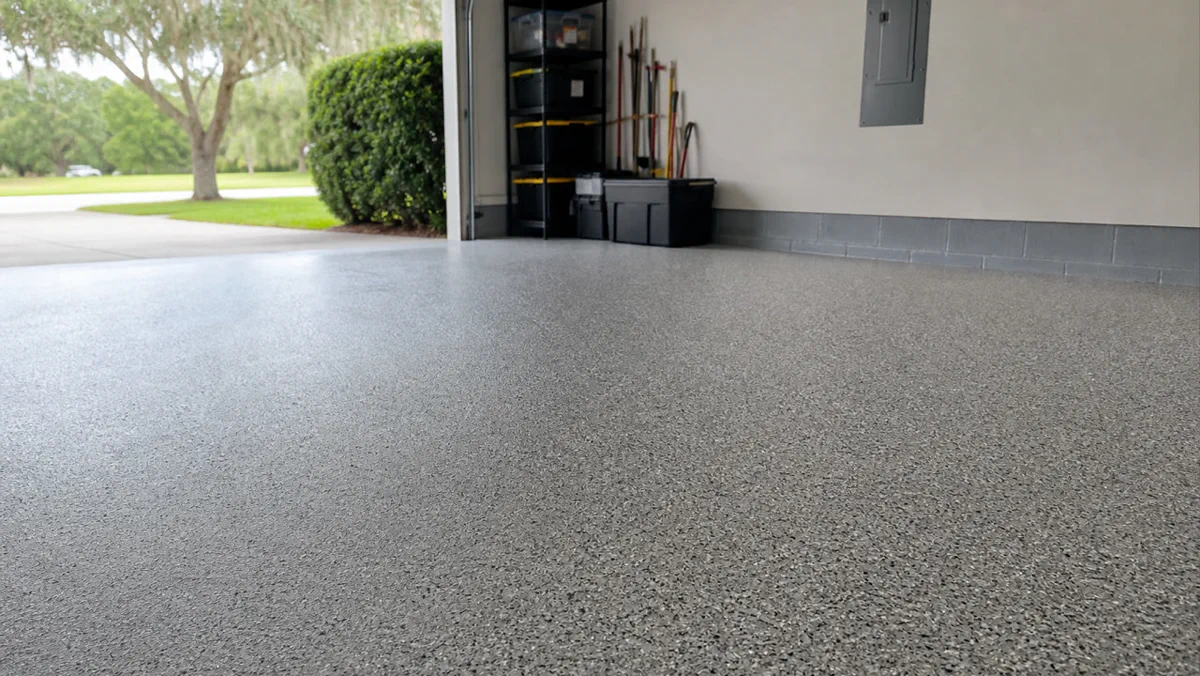
Finished flake-style garage floor coating example for Ocala planning

Call about the right coating service

If you already know the floor is painted, stained, cracked, damp, or used as a shop, mention that first. If you are not sure whether epoxy, polyaspartic, flake, or resurfacing is the right fit, start with the condition and use of the garage instead of a product name.

Request Garage Floor Coating Help

Share the slab condition, garage size, storage/access issues, and timing so the floor review can focus on the right service scope.

Talk Through Your Floor ConditionCall (352) 677-2664
Call (352) 677-2664