Do not assume all coatings are the same
Epoxy, polyaspartic, flake, and resurfacing discussions can overlap, but the prep and topcoat details matter.
Repair guide
This guide helps you organize the slab and access details that actually affect garage floor coating work. It is not a contractor checklist or a promise of scope.
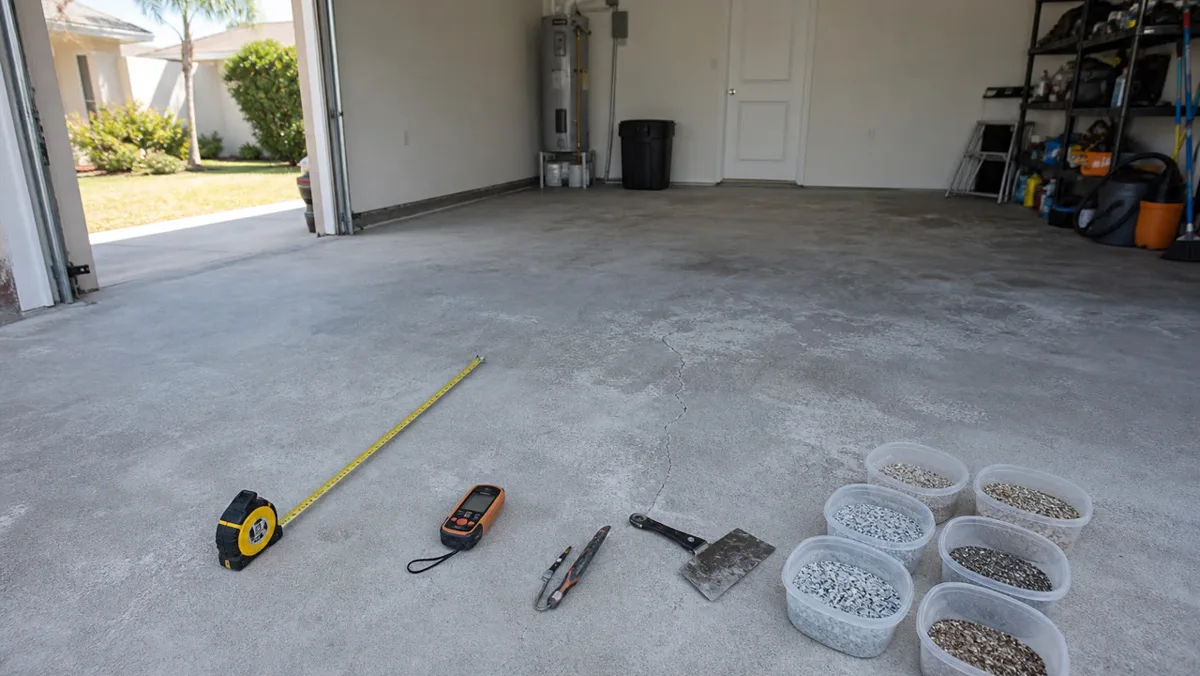
Epoxy, polyaspartic, flake, and resurfacing discussions can overlap, but the prep and topcoat details matter.
Some cracks can be treated cosmetically; others may show movement or slab conditions that deserve a separate repair discussion.
A faster cure window can be useful, but the floor still needs enough preparation and the right conditions for the system being used.
Walk the floor when the garage is empty enough to see the corners and traffic lanes. Note where tires usually sit, where water enters, where oil or rust has stained the concrete, and whether the surface feels powdery when swept. Look at the garage door threshold, side-entry door, steps, stem walls, and any cracks that run through high-traffic areas. If the floor has a shiny patch, old paint, adhesive, or a sealer, mention it before the estimate so the preparation discussion starts in the right place.
Also think about what has to move. Wall shelving, ceiling racks, refrigerators, freezers, motorcycles, golf carts, tool chests, and lawn equipment can change the schedule even if the square footage is ordinary. If the garage is used as a gym, workshop, hobby room, tack area, or storage overflow, say so. A good coating discussion should connect the finish, texture, topcoat, and return-to-use timing to the way the floor will be used after the project, not only to the color selected on a sample card.